


Leather shoes are put to the test in autumn/winter
Rain, snow, salt… the cold season is merciless on your leather shoes. Without precautions, a sudden downpour or a snowy sidewalk can quickly dull, stain, and damage your precious footwear. How can you prevent your leather Oxfords or Derbies from suffering the consequences of autumn and winter weather?
In this article, we offer practical, step-by-step advice on how to prevent damage and care for your leather dress shoes. You'll discover essential techniques—from waterproofing to using shoe trees —that will allow your shoes to face the colder months without losing their elegance. Will your leather shoes survive the winter? The answer is yes, provided you give them the attention they deserve!
On the agenda :
- Autumn/winter weather: what are the risks to leather?
- Preventive care: prepare your shoes to face the elements
- After rain or snow: tips to save your shoes
- Expert tips: Habits to extend the life of your shoes
- Some key figures
- FAQ
- Conclusion
1. Autumn/winter weather: what are the risks to leather?
Autumn and winter put our shoes to the test. The main threats? First, rain and humidity , which can penetrate the leather, leaving dark marks and reducing its suppleness. Soaked leather that isn't dried properly will eventually harden or crack. Second, de-icing salt , widely used on roads and sidewalks (every winter, approximately 1 million tons of salt are spread in France), seeps into the leather and causes unsightly whitish stains. This salt is even one of the main culprits behind winter damage to shoes: it stains and weakens the material if it isn't cleaned off quickly. Finally, mud, snow, and cold complete this treacherous trio: mud clogs the seams and pores of the leather, snow wets the shoe and then cools it abruptly, and frost can dry out the leather completely.
In practical terms, an unprotected pair of leather dress shoes is likely to develop:
- Water or salt stains on the surface (white halos on the leather and sole).
- Long-term drying of the leather, which loses its natural oils and suppleness.
- Deformations of the upper and sole (arching that deepens, upper that buckles) due to alternating wet/drying.
- Premature wear and tear : leather that cracks, seams that come undone, leather soles that peel off or rot.
Fortunately, this damage isn't inevitable! Prevention is better than cure: there are simple ways to protect your leather shoes from the elements , and solutions to minimize damage if you're caught in a downpour. Let's get straight to the point with the preventative care you should give your shoes starting in the fall.
2. Preventive maintenance: prepare your shoes to face inclement weather
Waterproof immediately
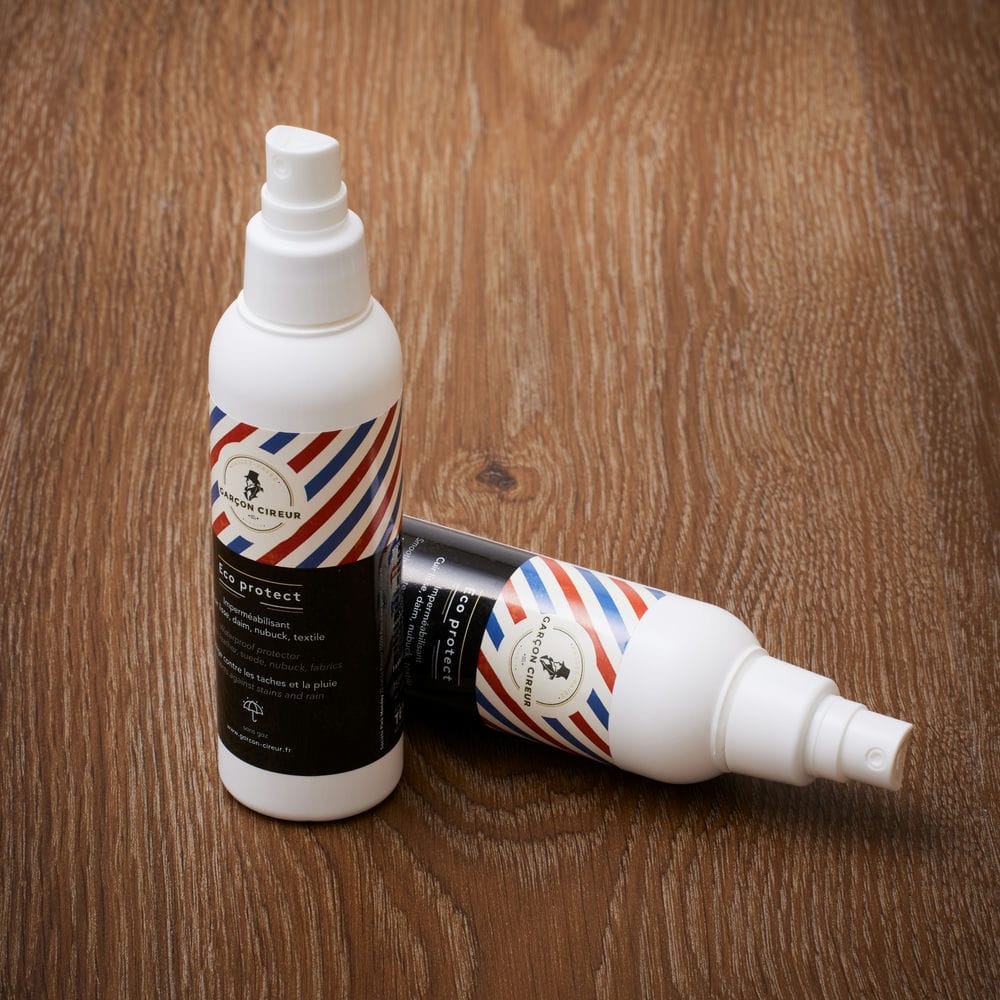
Garçon Cireur eco-friendly waterproofing spray , an invisible shield against rain
The first step to protecting your winter shoes begins even before damage occurs: preventative waterproofing . Treating your shoes with a protective spray creates an invisible barrier that prevents water and dirt from penetrating the leather. Choose a waterproofing spray . Apply it to clean shoes, holding the spray about 20 cm away and spraying evenly. Tip : always test the product on a small, inconspicuous area of the leather to ensure it doesn't cause discoloration.
How often? A single treatment isn't enough for the whole season. The protective effect of a spray diminishes over time. Experts recommend re-waterproofing your shoes regularly during wet periods: in autumn/winter, one application per month is a good average in rainy weather. Without this reminder, the protection will no longer be guaranteed, and the leather will become vulnerable to even the slightest drop of water.
Note that not all leathers have the same needs: smooth, pigmented leathers tolerate standard waterproofing sprays well, while suede, nubuck, or velvet leathers require a specific spray to preserve their finish. Treat your suede shoes as soon as you buy them, before the first outing, to protect them from water or mud stains.
Nourish and polish the leather regularly
Waterproofing isn't enough: leather is an organic material that needs care to remain supple and durable. Regular moisturizing is essential, especially in winter when cold and damp conditions can dry it out. Use a colorless or tone-on-tone nourishing leather cream : apply it every 4 to 6 weeks, or as soon as the leather appears dry. The cream will replenish the leather's natural oils and prevent cracking.
After the cream comes the polish . Polishing your shoes offers a dual benefit: it deeply nourishes the leather and creates a thin, waxy layer on the surface that acts as a protective film against water. Choose a polish that matches the color of your shoes. Apply it sparingly using a dauber brush or a soft cloth. Apply in circular motions to ensure thorough penetration. Allow to dry for a few minutes, then buff with a horsehair polishing brush .
This shoe-polishing ritual, far from being a chore, is your shoes' best ally for prolonging the life and suppleness of the leather. In addition to restoring shine, regular polishing (for example, every 2 to 3 weeks in winter, alternating with cream) offers natural protection against water thanks to the oils it contains. This creates a discreet water-repellent barrier without compromising the leather's breathability.
Finally, if your shoes are new, consider preparing the soles if they are leather. A genuine leather sole can be made more resistant to moisture by applying a thin layer of neatsfoot oil or mink grease to the edge and underside (only on the outsole, not the upper!). This will soften the leather and protect it from standing water on the ground. Alternatively, you can have a shoemaker add rubber wear pads to the most exposed areas of the sole: an invisible trick to insulate your shoes from ground moisture while preventing premature wear of the leather soles.
Choose shoes suitable for inclement weather
Despite all these precautions, some autumn/winter days are so wet that it's best to adapt your choice of footwear . In case of heavy rain or snow, opt for a more robust pair: for example , leather ankle boots with a lugged rubber sole (commando style) which will offer better grip and waterproofing. The brands featured at La Maison du Chausseur offer elegant boot models with rubber soles, ideal for braving the elements while remaining stylish. The Achille lace-up ankle boots from Guillemets are a perfect compromise between optimal grip and aesthetics!
For your favorite leather-soled dress shoes, consider clever accessories like rubber overshoes (also called galoshes) that you slip on over your shoes in case of a sudden downpour. They fully protect the shoe (upper and sole) from water and snow, and are easily removed once you're under cover. It's a small investment that can prevent a lot of damage, especially if you have to walk through slush and salt.
One last tip: alternate your shoes. If you're lucky enough to own several pairs of dress shoes, avoid wearing the same pair two days in a row during the winter. This allows each pair time to dry properly and "breathe" between wears. We'll come back to this golden rule later, as it's one of the secrets to the longevity of any leather shoe.

THE Achille de Guillemets lace-up ankle boots : notched rubber sole
3. After rain or snow: steps to save your shoes
Dry without rushing (and without direct heat)
Despite all your precautions, you're caught in a downpour or you've walked through slush? Don't panic. When you get home, you need to act quickly but properly to minimize the damage. Start by gently removing the dirt: brush off the mud and snow with a soft brush or a warm, damp cloth. Don't forget the soles and heels. If road salt has splashed onto your shoes (leaving those infamous whitish stains), neutralize it by dabbing the affected areas with a clean cloth soaked in a mixture of warm water and white vinegar (half and half). The vinegar will dissolve the salt and prevent it from damaging the leather. Then wipe with a regular damp cloth to remove all traces of vinegar.
Then, it's crucial to dry your shoes thoroughly , but avoid any direct heat source. The reflex to put wet shoes near a radiator or fireplace is a bad idea: excessive and sudden heat could harden and crack the surface leather, or even deform the structure (the sole shrinks, the seams weaken). Instead, let them air dry at room temperature . You can temporarily stuff the front of the shoe with newspaper for the first hour to absorb excess moisture (especially if the lining is soaked). Change the paper if it becomes too damp.
Once most of the water has been absorbed, replace the paper with your wooden shoe trees . Insert red cedar or unvarnished beech shoe trees into each shoe. These will help the leather maintain its original shape by gently stretching the upper from the inside, preventing deep creases and deformations. Most importantly, the wood will finish absorbing any remaining moisture and accelerate a gentle, complete drying process. It also eliminates odors by absorbing perspiration. Did you know that our feet have approximately 250,000 sweat glands and can produce up to 120 ml of sweat per day? This moisture is the enemy of leather: hence the importance of letting it evaporate in absorbent wood rather than stagnating inside the shoe.

Insert beechwood shoe trees into your leather shoes to dry them and maintain their shape.
Nourish, cleanse and revive afterwards
Once your shoes are completely dry, examine them. The rain may have left small marks or the leather may look dull. Now is the time to give them a complete post-weather care :
- Cleaning : If salt residue persists, use a special suede/nubuck eraser. (If suede shoes) or a soft, damp cloth (on smooth leather) to gently rub the stained areas. For a deeper clean, a leather cleaning milk will do the trick: it will remove impurities and old layers of polish, leaving the leather "bare" and ready to be treated.
- Care and hydration : Reapply a nourishing cream to the entire smooth leather area to counteract the drying effects of water and salt. Massage the cream in well, paying particular attention to folds and seams. Leave on for a few minutes.
- Protection and shine : Finish with a coat of Shoe polish will restore shine and rebuild a protective barrier. If the color has faded slightly due to water, use a matching tinted polish to revive the original shade. Otherwise, a colorless polish will suffice. After buffing, your shoes will regain their original luster.

Maintenance kit: shoe polish, brush, waterproofing spray, nourishing cream
4. Expert tips: Habits to extend the life of your shoes
Beyond occasional care, adopting good maintenance habits throughout the year will truly make a difference to the longevity of your shoes. Here is some advice from shoe experts on this subject:
Alternate the pairs and let them rest
As mentioned, don't wear the same pair of shoes every day. Leather needs to "breathe" after wear to fully release absorbed moisture and regain its structure. Experts recommend giving a pair of leather shoes a minimum of 24 hours of rest after wearing them. In practical terms, if you have an important meeting on Monday and wear your beautiful leather derbies, switch to another pair on Tuesday, and then wear the derbies again on Wednesday. This simple rotation can literally double the lifespan of your shoes, as it prevents continuous wear without proper rest.
If your wardrobe allows, ideally you should have four or five quality pairs to rotate, so that each pair is worn only once or twice a week. Not only will your shoes last longer, but you'll also have an excuse to mix up the styles and colors! And of course, never forget your shoe trees as soon as you take your shoes off to maintain their shape and absorb moisture. It's a small step that goes a long way in preserving your shoes.
Store your shoes properly
How do you store your shoes when you get home? The worst thing you can do is leave them damp in a confined space. After letting them air dry, store them in a dry, well-ventilated, and temperate place. Avoid damp locations (like a cellar or a poorly insulated garage) or places that are too hot (like right next to a radiator). Ideally, use a wooden shoe cabinet (cedar is excellent because it absorbs moisture and odors) or breathable fabric shoe bags. For example, La Maison du Chausseur offers travel bags that can also be used as individual storage bags, keeping the leather dust-free while allowing it to breathe.
Remember to reshape your shoes before storing them for an extended period. A shoe tree (again!) or, failing that, some tissue paper tucked inside, will help maintain the shoe's shape. This will prevent it from becoming misshapen or excessively bent while not being worn.
Finally, a light dusting now and then, especially if your shoes haven't been worn for a while, is a good idea. A quick brush to remove dust, a little cream if the leather looks dry, and your shoes will be ready to wear for any occasion. This basic routine prevents the accumulation of micro-dirt or excessive drying of the leather between seasons.
Investing in quality and maintenance
Our latest advice echoes a mantra dear to La Maison du Chausseur : quality and care go hand in hand . Well-made shoes, crafted with premium leathers and solid construction, will respond much better to care than lower-quality footwear. By investing in brands renowned for their expertise—like those we select for our boutique (think McFinlay with its timeless English style, or Lazzareli with its Italian elegance)—you start with a distinct advantage. These quality shoes are made to last, provided they are cared for regularly.
And maintaining your shoes doesn't necessarily mean spending hours on them: it's mostly about consistency . Five minutes of simple steps after a rainy day (brushing, shoe trees, drying) is far better than waiting for damage to occur. The philosophy of La Maison du Chausseur is, in fact, to offer shoes that combine "timeless elegance and functionality, so that each pair becomes an essential part of your daily life." We love our everyday shoes, we wear them, and... we take care of them. This authentic relationship with the object is cultivated through small rituals.
5. Some key figures
- Twice as long : A well-maintained pair of shoes (alternating wear, using shoe trees, and regular polishing) can last at least twice as long as a neglected pair. Investing a little time in maintenance therefore saves money in the long run by preventing frequent replacements.
- 24 to 48 hours : this is the minimum recommended resting time for leather shoes between wears. During this time, the shoe tree works its magic, helping the leather to dry completely and regain its shape, thus preventing deformation and the proliferation of bacteria in damp leather.
- 120 ml : the amount of sweat your feet can produce in a single day. Without proper drying, this moisture accumulates inside the shoe and can damage the lining, promote odors, and even cause the leather to rot in the long run. This is why it's important to use unvarnished wooden shoe trees to absorb moisture after use.
- 1×/month : Average frequency of waterproofing in autumn/winter (regular urban use).
- 2–3 months: Recommended interval for applying a nourishing cream to smooth leather worn frequently.
6. FAQ
How can I protect my leather shoes from the rain without damaging them?
The key is prevention. Waterproof your shoes with a suitable spray before they are exposed to rain. Apply it to clean, dry leather, and reapply regularly during the wet season. You can also polish your shoes frequently: polish creates a light barrier. If heavy rain is forecast, wear shoes with rubber soles if possible, or use waterproof overshoes to keep your leather shoes dry.
What should I do immediately after a downpour if my leather shoes are wet?
When you get home, don't delay: remove any dirt (muddy water, salt) with a damp cloth. Untie the laces if necessary to access all areas. Absorb excess water by dabbing with newspaper. Then let it air dry, away from any direct heat source. Place unvarnished wooden shoe trees inside to aid drying and maintain the shape. Once the leather is dry, condition it with a cream and then polish it to a shine. These steps will prevent the leather from hardening or becoming permanently stained.
My shoes have white marks after the snow, how do I remove them?
These white halos most likely come from de-icing salt. To remove them, many shoemakers instinctively use a mixture of equal parts warm water and white vinegar. Soak a cloth in this solution and gently rub the whitened areas. The vinegar dissolves the salt. Then wipe with a damp cloth. Repeat if necessary. Once the stain is gone, remember to condition the leather (as salt and vinegar can dry it out on the surface) and then polish it.
How to use shoe trees correctly?
Insert them as soon as you take off your shoes, especially after a day of walking. Choose unfinished wooden shoe trees (cedar, beech) of the right size: they should fill the shoe without being too tight. Leave them in place for at least 24 hours. Spring-loaded shoe trees offer better support than simple tensioner models; use the latter when traveling. Never varnish your wooden shoe trees (this will block their absorption) and keep them dry. A very light sanding from time to time will revive their absorbency and their natural wood scent. With proper care, your shoe trees will last as long as your shoes!
What cleaning products do you recommend for autumn/winter?
- Brushes (for dusting, applying and polishing)
- Chamois cloth (clean and even application)
- Nourishing cream & polish (hydration, protection and coloring)
- Multi-material waterproofing spray ( protection)
- Horse trees made of cedar or beech ( absorption and shape)
Conclusion
In autumn and winter, your leather shoes can take a beating – but it doesn't have to. By following the tips in this article, you can preserve the beauty and longevity of your shoes season after season. Remember: every little bit helps. Waterproofing your leather shoes beforehand will prevent many stains. Drying them properly after walking in the rain will prevent irreversible damage. Conditioning and polishing them regularly will ensure they retain their suppleness and shine for years to come. And what could be more satisfying than seeing your shoes age gracefully, developing a beautiful patina, rather than ending up cracked at the bottom of a closet?
At La Maison du Chausseur , we firmly believe that timeless elegance goes hand in hand with proper care . Taking care of your shoes means prolonging the story they tell on your feet!
Discover the maintenance articles

Walk with peace of mind in your protected shoes.